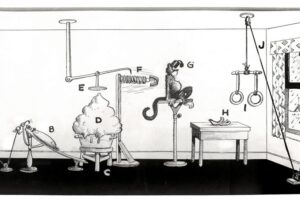
Final

(Fail to) Produce a book that coherently documents and relates all projects and everybody’s work.

Take the text from our class website and edit and revise it to reflect your own understanding of what actually happened in each project. This small writing project is a chance for you to articulate your own sense of the course and to make a critique of its variously stated objectives. The tone can be funny or serious or both. Start with the text as it appears on the website and edit it word by word, line by line. Cross things out, add words. You can choose either to show your revisions, with strikethroughs and erasures or whatever, or just produce a new text.
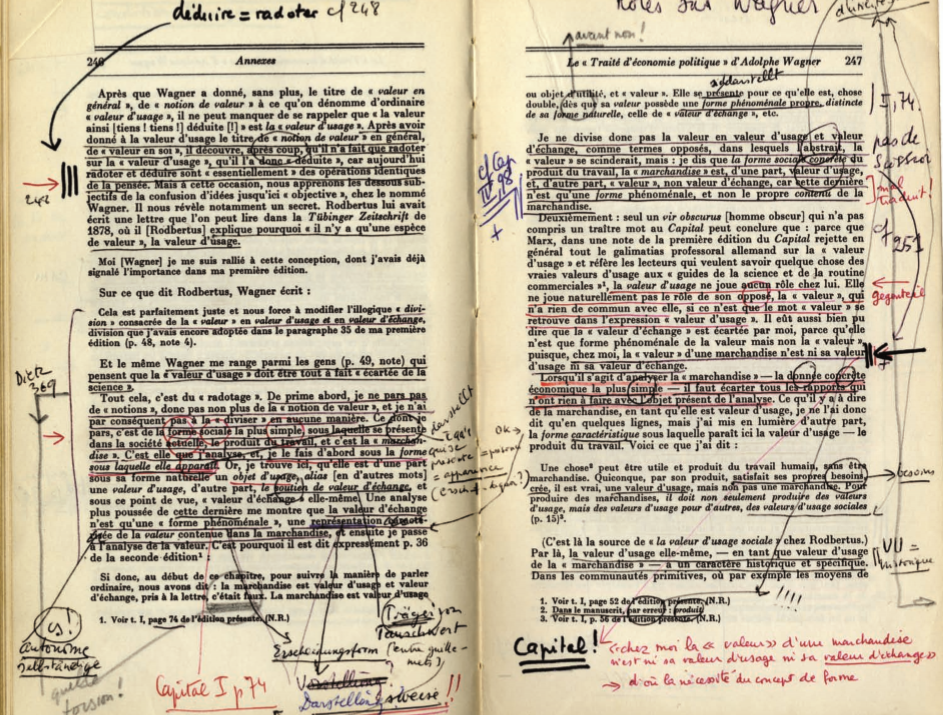
The book will begin with your revision of the course introduction, and then move through the three projects, each of which will be introduced by your revised description.

Typeset the texts in a more or less consistent way. 

Come to class next Monday with all these texts ready to print. 

We’ll spend the final week printing and assembling a book that compiles everything and collaboratively producing a cover.

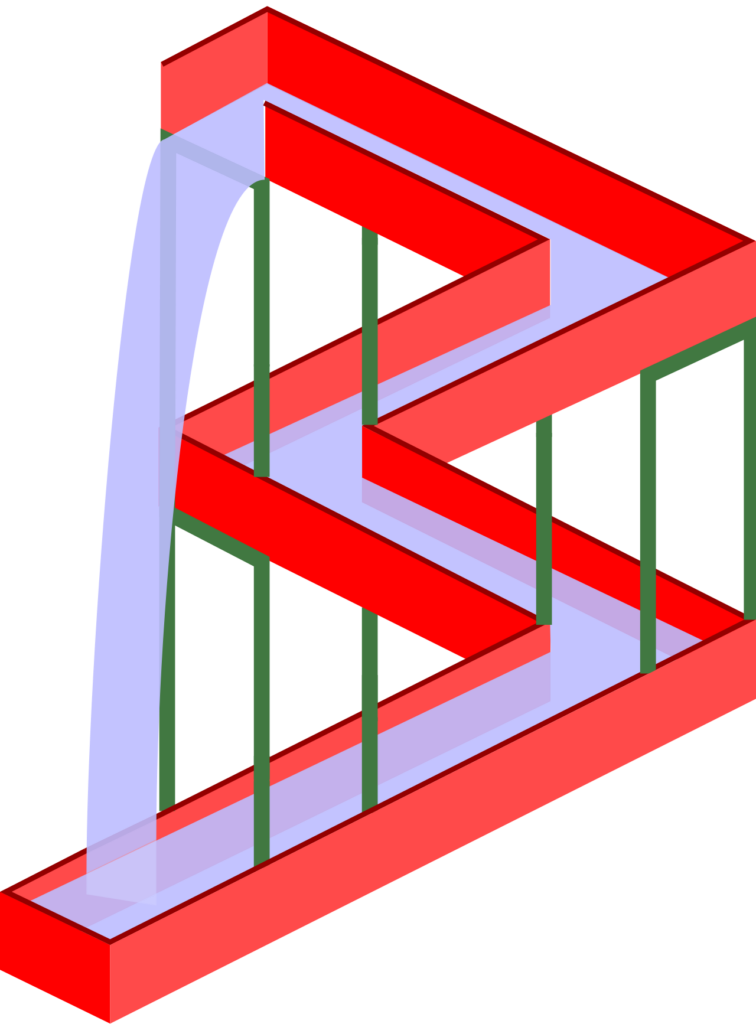
Imaginary Failure

1
Find ten photographic images that represent a failure of some kind. The failures could be political, technological, economic, mundane, world-historic, funny, tragic, etc. Aim for a variety of types of failure in your set of five. Pay attention to how well the image communicates its particular failure subject. Find each image in a different image-sharing platform (consult this list).

2
Arrange the images in a sequential order that tells a story of some kind. Write a one sentence caption for each image to facilitate your construction of the narrative. The narrative can be historical, abstract, figurative, whatever; it should just be built as a linear order with a beginning, middle, and end. A failure grand narrative built by ten images of individual failures.

3
Fail to faithfully digitally reproduce the image. Make another version of each image that fails to accurately reproduce some aspect of the image. Think about resolution. Think about how image-editing software is used to correct and optimize photography and instead use the software to do something else. As you digitally reproduce each image, “seduce the automatic apparatus into making something improbably within its program.” This coaxing of improbability, this turning the software against itself, is the failure. The failure might be subtle. Think about how the failure of digital reproduction unfolds across the sequence of ten images — echoing, ignoring, contradicting, or otherwise relating to the logic of the narrative.

4
Print the images and assemble them in a set of folded sheets. Pick two of your ten images to reproduce in the inks of our risograph printer. Fail to accurately translate the colors of the original image in a way that undermines or subverts the meaning of the image.

Further Reading
Hito Steyerl, In Defense of the Poor Image (2010)
Legacy Russell, Black Meme (2024). synopsis and review
Vilem Flusser, “To Imagine” and “To Envision” from Into the Universe of Technical Images (1985, 2011)

The Power of Negative Thinking 

the power of negative thinking. 

In this project you will produce a series of posters that break the spell of toxic positivity, through a set of typographic failures.

1. 
find texts that succinctly, poetically, absurdly express the ideology of positive thinking. look for “motivational content”. look for “positive journal encouraging shiny quotes”. look for stickers on amazon,com. for instance. dig deep if necessary. remember that the bravest thing you can be is yourself.

find 10 texts.

as you go, play attention to the affirmative typographic form that accompanies this content.

2
typeset your texts. experiment with typographic forms that cause the meaning of the affirmations to fail, subtly or dramatically or hilariously or murkily. you might take cues from the original typography.

3
read passages from Minima Moralia by Theodor Adorno and select some sentences whose content expresses, alternately, the power of negative thinking. 

4
make typography for these sentences that dialectically exhibits opposite forms from the typography you developed for your affirmations.

5
from these sketches, make a series of 10 letter-size posters that alternate between the two types of texts to produce a sort of essay or ode to the power of negative thinking.

Failure Narrative 1

1. Narrate an episode of failure in your personal life and/or your design life. Your narration can be either comic or tragic, but it should be one of these; or both. The failure could be “about” graphic design or graphic design could make an incidental appearance. Give thought to the sequence of events and aim to make their unfolding suspenseful. Think about the vibe you impart to the episode. Are we talking Space Shuttle Challenger Disaster or a funny home video? Give the narrative a title.

2. Karl Gerstner, in “Integral Typography” (1964) writes 

Integral typography strives for the marriage of language and type resulting in a new unity, in a superior whole. Text and typography are not so much two consecutive processes on different levels as interpenetrating elements.

Unity is reached in different phases, each successor including its predecessor:
— in the integration of different signs, different letters into the word.
— in the integration of different words into the sentence.
— in the integration of different sentences into the ‘reading-time’ dimension.
— in the integration of independent problems and functions.

3. Give your narrative typographic form on a single sheet of paper, in ways that fail to achieve the integration of language and type (of typographic form and linguistic content), at every level. This failure in integration is the failure of the typography to convey the meaning of the failure that your text communicates.